The legal side of airspace
Before a lender can take security, you need a legal interest in the space you will build in. That is usually a long lease of the airspace granted by the freeholder, or ownership of the freehold itself. The lease needs to give you the rights to build, to access the roof and scaffold, to connect services through the building and to tie into the structure.
Existing leaseholders' rights matter too. Their leases may include rights over the roof, and works may need their agreement or a variation. Party wall agreements with neighbours, rights of light and any restrictive covenants must also be dealt with. Lenders' solicitors will review all of this, so having it in order early avoids delays.
Planning and building safety
In England, permitted development rights allow additional storeys on some types of building, subject to prior approval covering matters such as design, amenity of neighbours and the impact on the existing building. Many schemes still go through full planning, particularly in conservation areas or on taller buildings.
Adding storeys can change how building regulations and fire safety apply to the whole building. Where the finished building is 18 metres or more, or seven or more storeys, with at least two homes, it is a higher-risk building, and the building control process runs through the Building Safety Regulator before work can start. Lenders will expect the programme to allow for this.
Construction and structural risk
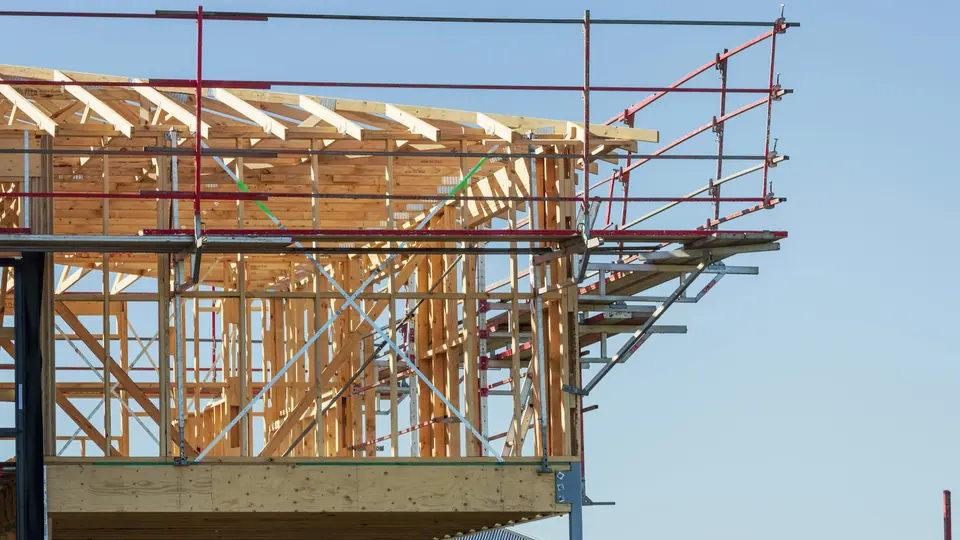
The existing building must be able to carry the new load. A structural engineer will usually assess the frame and foundations, and many airspace schemes use lightweight steel or timber frames, often manufactured off site, to reduce weight and time on the roof. Weatherproofing the building below during the works is a key risk lenders will ask about.
Lenders look for a contractor with airspace experience, a clear logistics and access plan, and a contingency for surprises once the roof is opened up. A structural warranty for the new homes is normally needed for buyers' mortgages.
How lenders structure airspace loans
Lenders typically advance part of the cost of acquiring the airspace on day one and fund the build in stages after inspection by a monitoring surveyor. The total loan is limited by the gross development value of the new homes and by total costs. Experienced developers usually access the best terms, and some lenders only consider airspace for those with a track record.
We compare the lenders that consider airspace and rooftop schemes, then approach those that fit with a clear case. Some heavy refurbishment bridging lenders also consider airspace as part of a wider refurbishment. Instant Quotes gives indicative figures as a starting point, and final terms depend on each lender's valuation and checks.