Land with planning permission
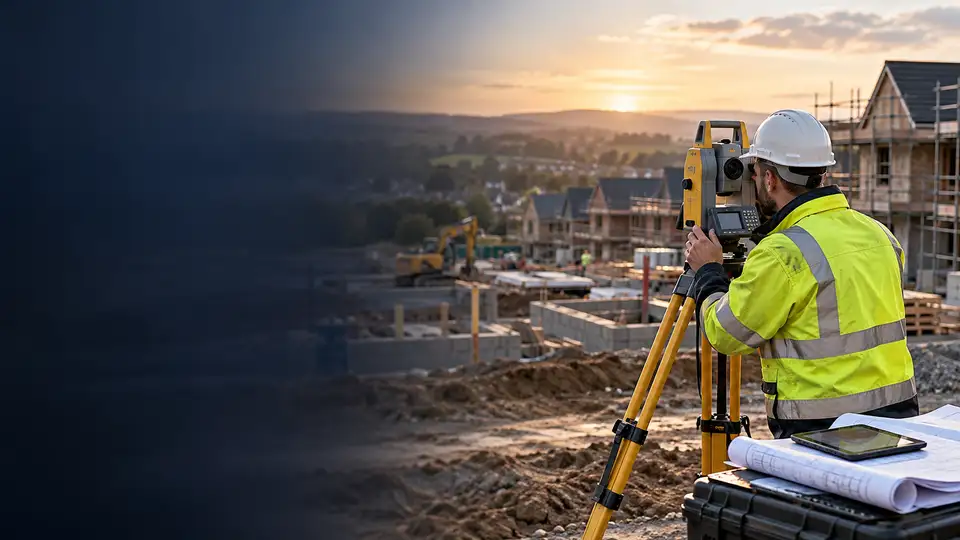
Land with detailed planning permission is the most straightforward case. Its value reflects what can be built, and the usual exit is development finance once the build is ready to start. Some developers bridge the purchase to secure the site, then arrange the development facility while conditions are discharged and contractors are appointed.
Lenders value the site on its current planning status. Outline consent carries more uncertainty than detailed consent, because reserved matters still need approval. The valuer will look at comparable land sales and a residual valuation based on the consented scheme.
It is worth considering whether the site could go straight onto development finance. Many development lenders include a land advance in the facility, which can avoid the cost of two sets of fees. We compare both routes so you can see which suits your timescale.
Land without planning
Land without planning permission is valued on its existing use, such as agricultural land or paddock, rather than on its development potential. Lenders are more cautious, typically lending a lower proportion of value than they would on consented land, and fewer lenders consider it.
Lenders want to understand the planning prospects and the exit if consent is not granted. Evidence that helps includes:
- Local plan allocation or inclusion in a land availability assessment
- Pre-application advice from the planning authority
- A planning consultant's report on the prospects of consent
- A realistic fallback, such as resale at existing-use value or refinance against other property
Where the land value alone does not support the loan required, additional security over other property can sometimes help.
Title, access and site issues
Land cases often turn on legal and physical details rather than the headline value. Lenders and their solicitors will check that the site has legal access to a public highway, that there are no ransom strips, and that any rights of way, easements, restrictive covenants or overage clauses are understood.
Ground conditions, flood risk, ecology, trees and utility capacity can all affect both value and planning. A site investigation or desktop report is not always required for a land bridge, but having one supports the valuation and the later development finance application.
We review these points with you before approaching lenders, because a clear picture of the site avoids surprises at valuation or during the legal work.
Loans to buy land: how land purchase finance works
A loan to buy land is usually a bridging loan secured by a first charge on the site. It is short term, often 6 to 24 months, with interest normally retained from the advance or rolled up and paid when the loan is repaid, so there are no monthly payments to fund from income. Many people search for a mortgage to buy land, but mainstream mortgage lenders rarely lend on a bare plot, and a term land mortgage is a niche product. For development land, specialist bridging lenders are the usual route.
The process runs in a familiar order. We look at the site, the price, your plans and your exit, then search the market for lenders whose criteria fit. A lender issues terms, instructs a valuer and its solicitors, and the loan completes alongside the purchase. Because a bridge can complete faster than a term loan, it suits a site bought at auction or from a seller who wants certainty.
What lenders want to see
- The planning position, and evidence for it: the decision notice, a pre-application response or the local plan allocation.
- Your deposit and where it comes from. Lenders usually lend a lower share of value on land than on a finished home, and less again without planning.
- A credible exit: development finance once the scheme is ready, a sale with improved planning, or a refinance.
- Clean title and legal access, with any covenants, overage or ransom strips explained.
- Your track record, especially if you plan to build the site yourself.
If you are ready to start building soon, compare a land bridge with development finance that includes a land advance, or see ground-up development finance. To work out what a site is worth to you, use the residual land value calculator. Building your own home on the plot is different again: see self-build finance. When you are ready, Instant Quotes shows matched land lenders with indicative rates.