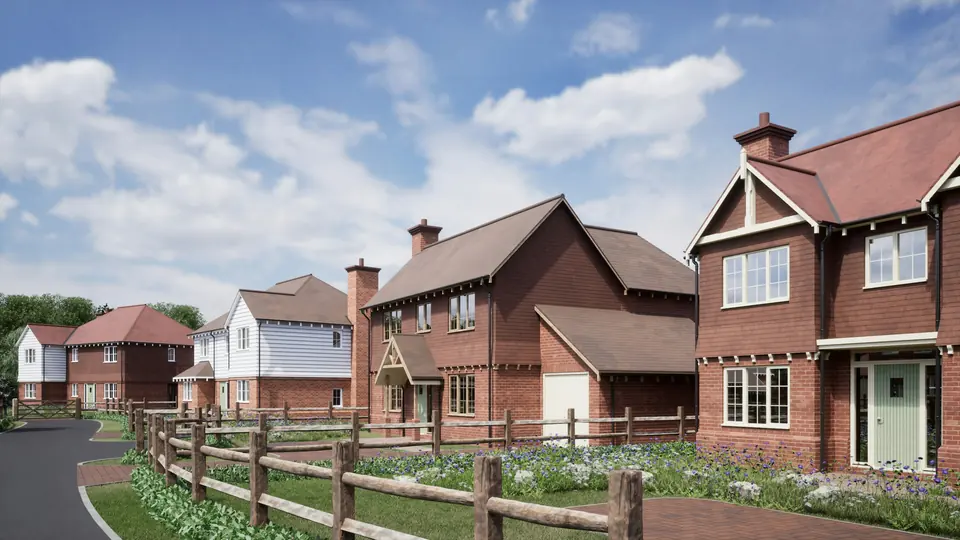
How it differs from other development finance
All development finance works in a similar way: an advance towards the site on day one, then build funding released in stages after the lender's monitoring surveyor has checked the work. What changes is the type of property and the exit.
On a residential scheme the exit is usually the sale of homes to individual buyers, or a refinance onto buy-to-let mortgages if you plan to keep some or all of the units. Lenders therefore look closely at local sales evidence, how quickly units of that type sell, and whether buyers will be able to get mortgages on them. That makes residential schemes the easiest kind of development to place with most lenders, and the widest choice of lenders is available for them.
Our ground-up development finance page covers new builds from the site upwards, whether the homes are residential or commercial. This page covers residential schemes of every kind, including conversions. For offices, industrial units and retail, see commercial development finance.
New build, conversion or both
Lenders treat new builds and conversions differently. A new build carries ground and construction risk from the start, so lenders focus on site investigations, the build contract and the warranty. A conversion starts with an existing structure, so lenders look at the survey, the condition of the building and whether the works need planning permission or can go ahead under permitted development rights.
- New build. Houses or flats on a cleared, brownfield or greenfield site, including demolition and rebuild.
- Conversion. Changing the use of a building to residential, such as office to flats. See commercial to residential finance and barn conversion finance.
- Extension and subdivision. Adding storeys, building in the roof space or splitting a house into flats. Some cases are better suited to heavy refurbishment finance where the works are less structural.
Whether a project is funded as development finance or as a refurbishment bridge depends mainly on the scale of the works and whether build funds are needed in stages. We will suggest the product that fits before any lender is approached.
Small schemes and first projects
Many residential schemes are small: one or two houses, or a handful of flats. Several lenders specialise in this size of scheme and some will consider first-time developers, usually where the scheme is simple, the contractor is experienced and a professional team is in place. Our guide to development finance for first-time developers explains what lenders look for.
Leverage is commonly measured against both the GDV and the total cost. Our guide to how much deposit you need for development finance explains how your contribution is worked out, and the development calculator lets you test LTGDV, loan to cost and return on capital before you apply.
Warranties, sales and the exit
Buyers of new-build and converted homes will usually need a structural warranty to obtain a mortgage, so lenders expect one to be arranged from the start. They will also want to know how units will be marketed, the expected sale prices and the time allowed to sell.
If units take longer to sell than planned, a development exit loan can repay the development lender once the build is complete, usually at a lower rate, while sales continue. If you plan to keep the homes and let them, the exit is a refinance onto buy-to-let or portfolio mortgages, and lenders will check the rent will support that borrowing.
How we compare residential development lenders
We compare lenders on leverage against GDV and cost, day-one land funding, how build funds are released, fees, experience requirements and the size of scheme each lender prefers. Some lenders focus on small schemes, others on larger sites, and banks often price lower but ask for more cash in and more experience.
Instant Quotes gives indicative figures from lenders on our panel as a starting point, and we can search the wider market where a scheme needs something the panel does not cover. Final terms depend on each lender's valuation, monitoring surveyor and credit checks. Development finance for schemes built for sale or rent is not a regulated mortgage contract; building a home you will live in yourself is covered by self-build finance.
Types of development funding
Residential development loans come in several forms, and many schemes use more than one. The main types of development funding are:
- Senior development finance. The main loan, with a first charge on the site. It covers part of the land on day one and the build costs in stages. See development finance.
- Stretch senior. A single senior loan at higher leverage, priced a little higher, which can remove the need for a second lender. See stretch senior development finance.
- Mezzanine finance. A second loan behind the senior lender that reduces the cash you put in, at a higher cost. See mezzanine development finance.
- Joint venture or equity funding. A partner provides some or all of the cash in return for a share of the profit, rather than interest. See joint venture development finance.
- Land bridging. A bridge to buy the site before the build facility is in place, often while planning or conditions are being dealt with. See land finance.
- Development exit finance. A short loan that repays the build lender once the homes are complete, giving time to sell or let. See development exit finance.
Which mix suits depends on the profit margin, how much cash you have and how much of the profit you are prepared to share. We compare the profit after finance for each structure, not just the headline rate. The development finance calculators show loan to GDV, loan to cost and return on capital, and 100% development finance explains how close lenders come to funding every cost.