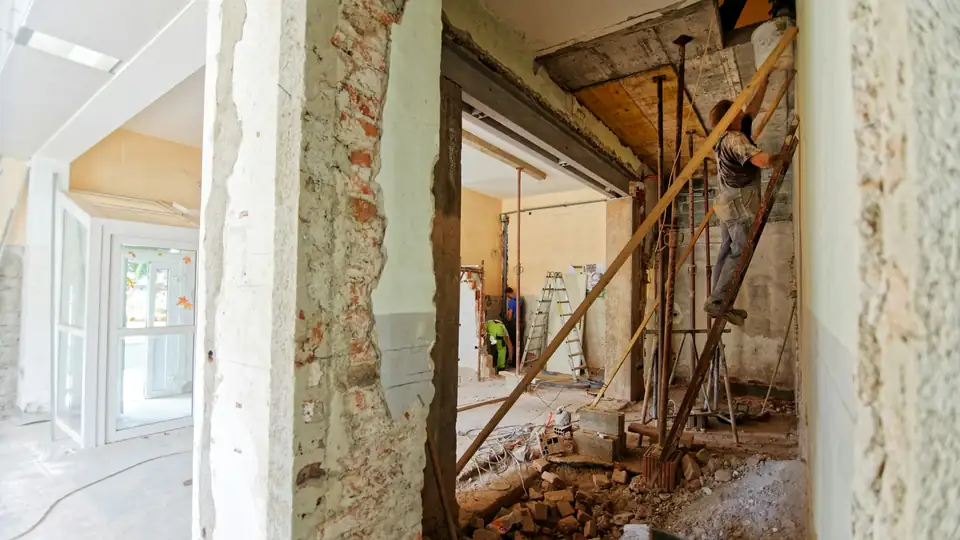
What counts as heavy refurbishment
Lenders generally treat works as heavy when they involve structural change, need planning permission or building regulations approval, or change how the property is used. Examples include extensions, loft and basement conversions, removing load-bearing walls, splitting a house into flats and converting a commercial building to homes.
Some lenders also look at the cost of the works compared with the property's current value. Where works are large relative to the value, the case may be treated as heavy refurbishment even if the work is mainly internal. At the upper end, where the works amount to a near rebuild, development finance may be the better fit.
Describing the project accurately from the start matters. A case presented as light refurbishment that turns out to involve structural work can be delayed or declined at valuation.
How the facility is structured
Heavy refurbishment facilities usually have two parts: a day-one advance towards the purchase or refinance, and a works facility released in stages. Many lenders size the overall facility against the gross development value, the expected value once the works are finished, typically up to around 65% to 75% of that value, alongside a limit on loan to cost.
Works funding is normally released in arrears. Before each release, a monitoring surveyor or valuer inspects the property and confirms the work completed, so you or your contractor need to fund each stage until it is reimbursed. Some lenders fund up to the full cost of the works, while others expect you to contribute part of it.
Interest is usually retained or rolled up and charged on the funds drawn. Costs to budget for include arrangement and exit fees, valuation and monitoring fees, legal costs and, where relevant, planning and building control fees.
What lenders want to see
Because the risk is higher, lenders ask for more detail than on a light refurbishment. A clear case usually includes:
- Planning permission, or confirmation that none is needed, and building regulations approval
- Architect's drawings and, where relevant, a structural engineer's report
- A detailed schedule of works with itemised costs and a contingency
- The contractor's quote, track record and insurance
- Party wall agreements where neighbouring buildings are affected
- Evidence for the end value, such as comparable sales or rental evidence
Many lenders want to see previous experience of similar projects. Less experienced borrowers can still be funded, especially with an experienced contractor or project manager, but terms are often more conservative.
Exits and timing
The exit is usually a sale of the finished property or a refinance onto a buy-to-let, HMO or commercial mortgage at the improved value. If you plan to refinance, check early that the finished property will meet the mortgage lender's criteria, including any rental cover tests and minimum ownership periods.
Heavy works often take longer than planned. Allow time in the term for the works, building control sign-off, any warranty or professional certificate, and the sale or refinance. A term with headroom costs relatively little compared with an extension under pressure.
We compare lenders on the day-one advance, works funding, drawdown process and experience requirements, as well as the rate. Instant Quotes gives indicative figures as a starting point, and final terms depend on each lender's valuation and checks.
If you or your family will live in the property
If the borrower is an individual or the trustees of a trust, and the property is, or will be, lived in by you or a close family member, the loan is a regulated mortgage contract with additional protections. We will tell you at the outset if that applies and how your case will be handled, and Instant Quotes shows only products built for regulated bridging when you tell us so.
Your home or property may be repossessed if you do not keep up repayments on a mortgage or any other debt secured on it.