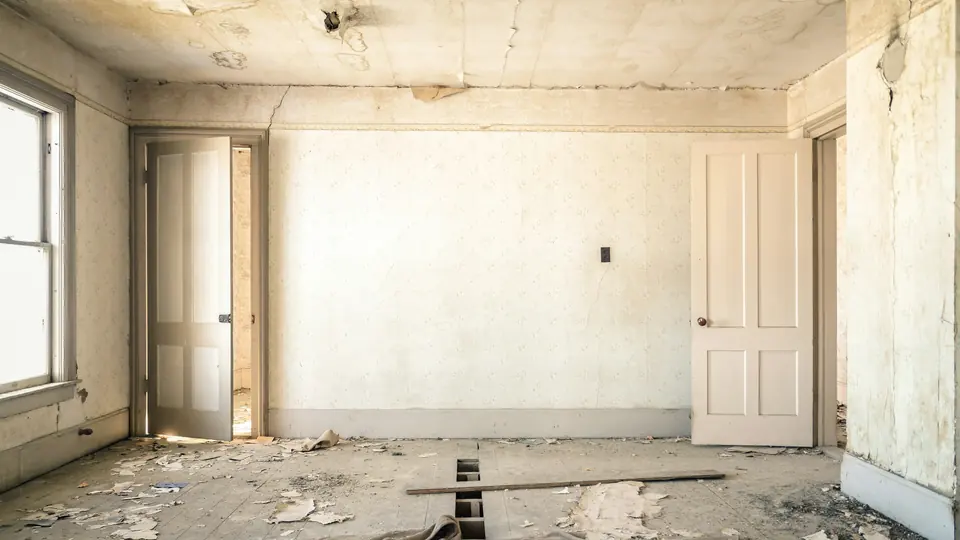
What makes a property unmortgageable
Mortgage lenders need a property they could sell easily if things went wrong, so they avoid anything that is not habitable or that has a known defect. Common reasons include:
- No working kitchen or bathroom
- Structural movement, subsidence or significant damp
- Fire or flood damage
- Japanese knotweed close to the property
- A short lease, often below about 80 years for many lenders
- Non-standard construction that lenders do not accept
- Title defects, missing consents or planning breaches
These properties often sell at a discount because the buyer pool is smaller, which is exactly why investors seek them out.
How bridging fills the gap
Bridging lenders assess the property and the exit rather than requiring a habitable home on day one. They will typically lend against the current value in its current condition, then expect the problem to be fixed during the term so that the property can be refinanced or sold.
Where works are needed, refurbishment finance can release funding for the works in stages, with some lenders sizing the facility against the value after the works. Our guide to light and heavy refurbishment explains how lenders categorise the work.
Some problems are easier than others
Fitting a kitchen or bathroom is straightforward, and many lenders are comfortable with it. A short lease can be fixed by a statutory lease extension, though the process and cost need to be understood before buying. Structural issues need a structural engineer's report and a costed repair plan. Japanese knotweed usually needs a management plan from a specialist firm with an insurance-backed guarantee, which mortgage lenders often expect to see.
Some issues cannot be fixed easily or at all, such as certain non-standard construction types. In those cases the exit is more likely to be a sale to another investor or a cash buyer, and lenders will look carefully at pricing evidence.
Planning the refinance exit
If you intend to keep the property, check before buying that a mortgage will be available once the work is done. Points to confirm include:
- Whether the mortgage lender applies a minimum ownership period before using the new value
- Expected rent and whether it meets interest cover tests for buy-to-let
- Building control sign-off, warranties or guarantees for the work
- That the lease, once extended, meets the lender's minimum term
A realistic programme plus a margin for delay gives you the right exit and term. Bridge to term products combine both stages with one lender.
Getting started
Lenders will want to know what is wrong with the property, how you will fix it, what it will cost and what it will be worth afterwards. Photos, a schedule of works with costs, and any surveys or reports you already have help lenders give firm terms quickly.
If you or a close family member will live in the property, the loan is a regulated mortgage contract and comes with additional protections; we will tell you at the outset how your case will be handled. To compare lenders, use Instant Quotes.
Common questions
Can I get a bridging loan on a house with no kitchen?
Yes. Many bridging lenders will lend on a property without a working kitchen or bathroom, on the basis that it will be fitted before refinance or sale.
Can I bridge a property with a short lease?
Some lenders will, usually with a plan to extend the lease during the term. Very short leases narrow the options and reduce the loan available.
Do I need a survey for an unmortgageable property?
It is strongly advisable. A survey, and specialist reports for structural issues or knotweed, show lenders the problem is understood and costed.
This guide is for general information only and should not be treated as legal, tax or financial advice. Lender requirements depend on the property and your circumstances.
